
Eight habits that help you find a job
Soraya Mohamedi · Employment Area Coordinator, Ubuntu Canarias · 6 min read · Published 2 November 2026

Looking for a job is tiring. You send CVs, you wait, nobody answers. There is no formula that always works, but there are habits that help your search get better results.
Here are eight. You don’t need to do them all at once. Read the list, choose one or two and start there.
The article in pictures
1 / 10



Swipe with your finger to see the next one. Tap a picture to see it bigger.
1. Be clear about the job you want
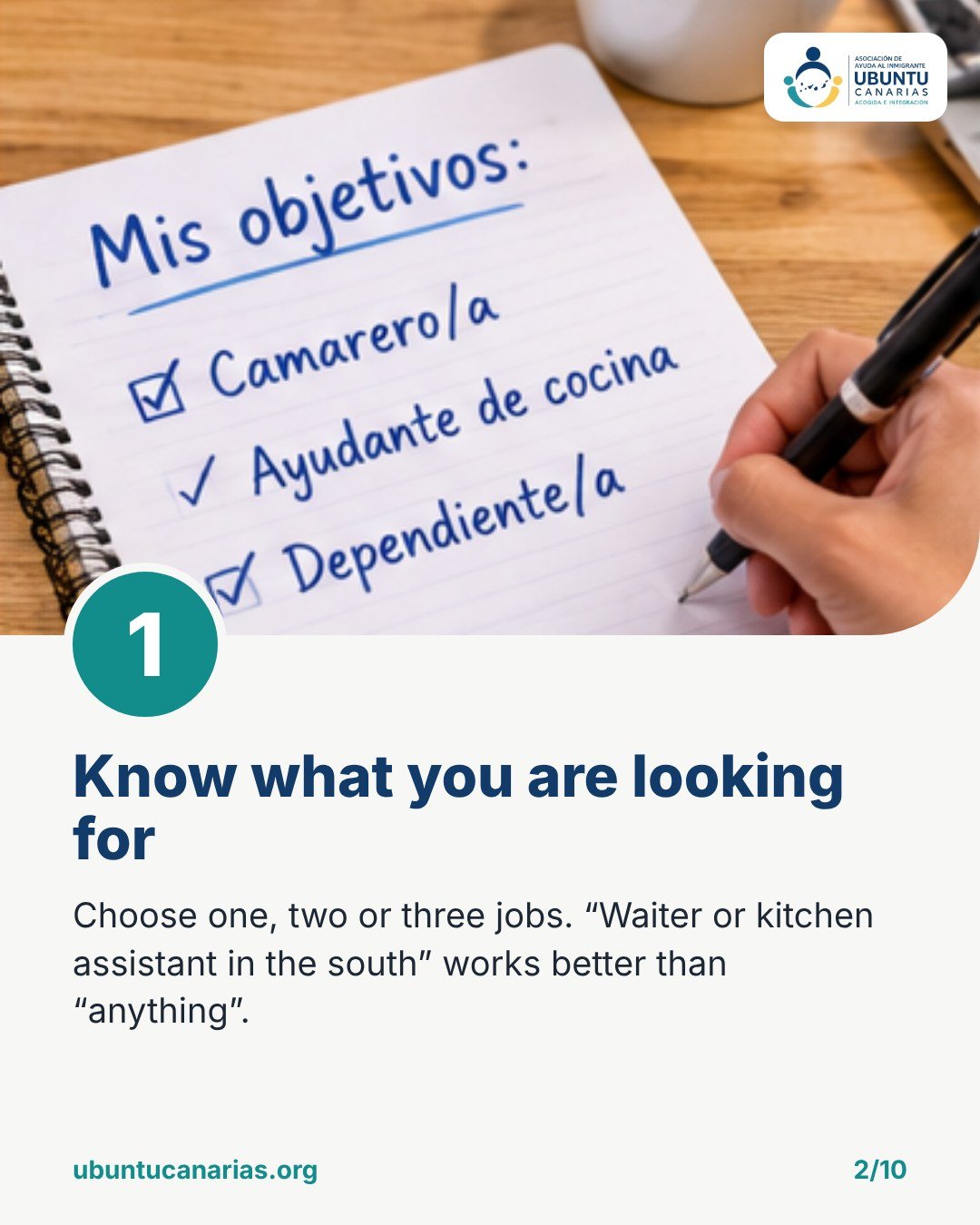
When you look for “anything”, it is hard to know where to look and what to put on your CV. It helps a lot to choose one, two or three specific jobs and an area.
Example: “I’m looking for work as a waiter/waitress or kitchen assistant in the south of Gran Canaria.” Now you know which offers to read, which hotels to visit and which experience to highlight.
Think also about what you can bring: the languages you speak, the work you did in your country, what you are good at. All of that counts, even if you have no papers to prove it.
2. Adapt your CV to each job offer
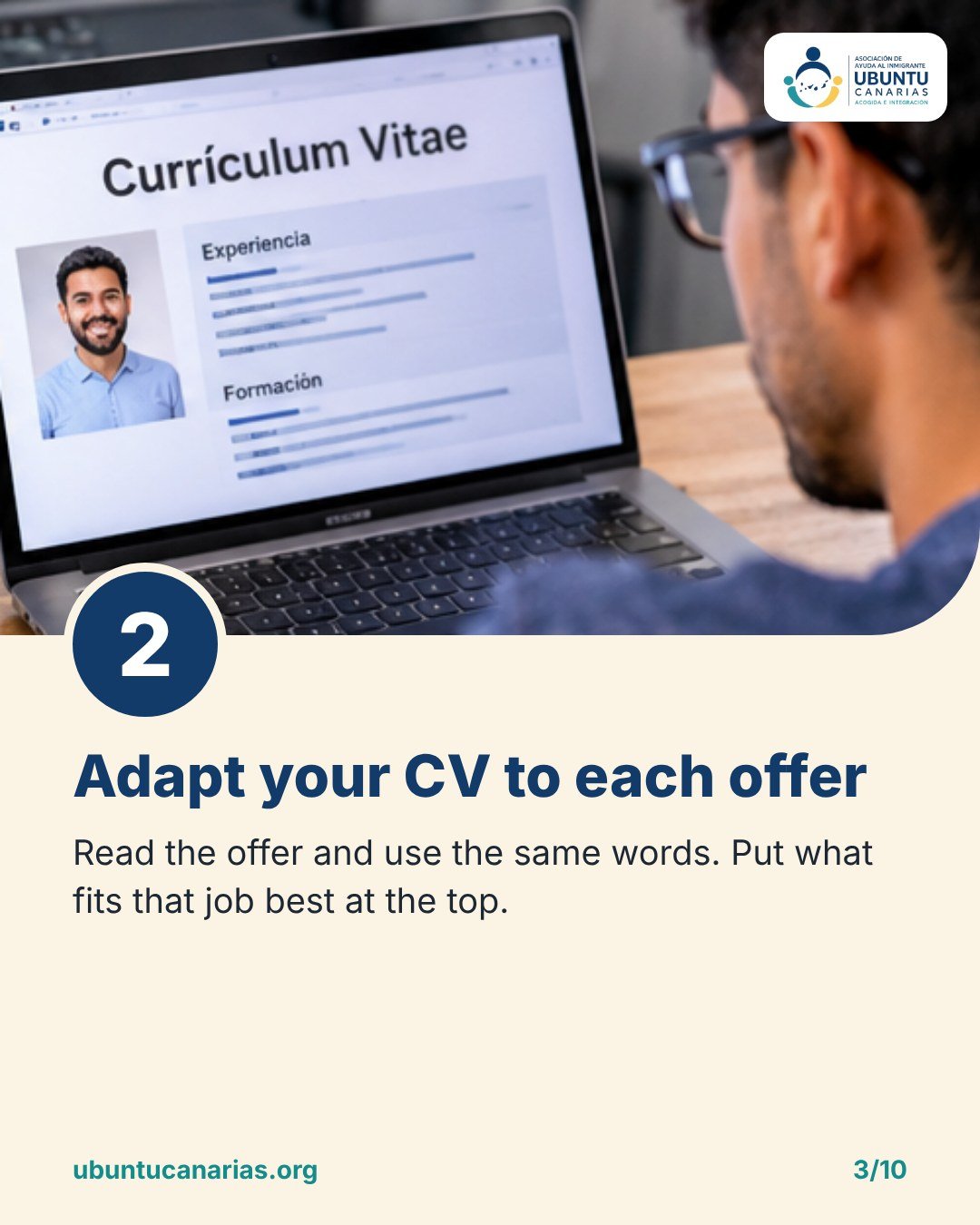
Sending the same CV everywhere is faster, but it usually works worse. Before you send it, read the offer calmly and look at what they ask for.
- Use the same words as the offer. If it asks for a “food handler” certificate (manipulador de alimentos), write it like that.
- Put the experience that is closest to that job at the top.
- Many companies use programs that read CVs before a person does. We explain it in how to prepare your CV for automatic filters.
3. Help companies find you
It is not only you who is searching: companies are also looking for people. So they can find you:
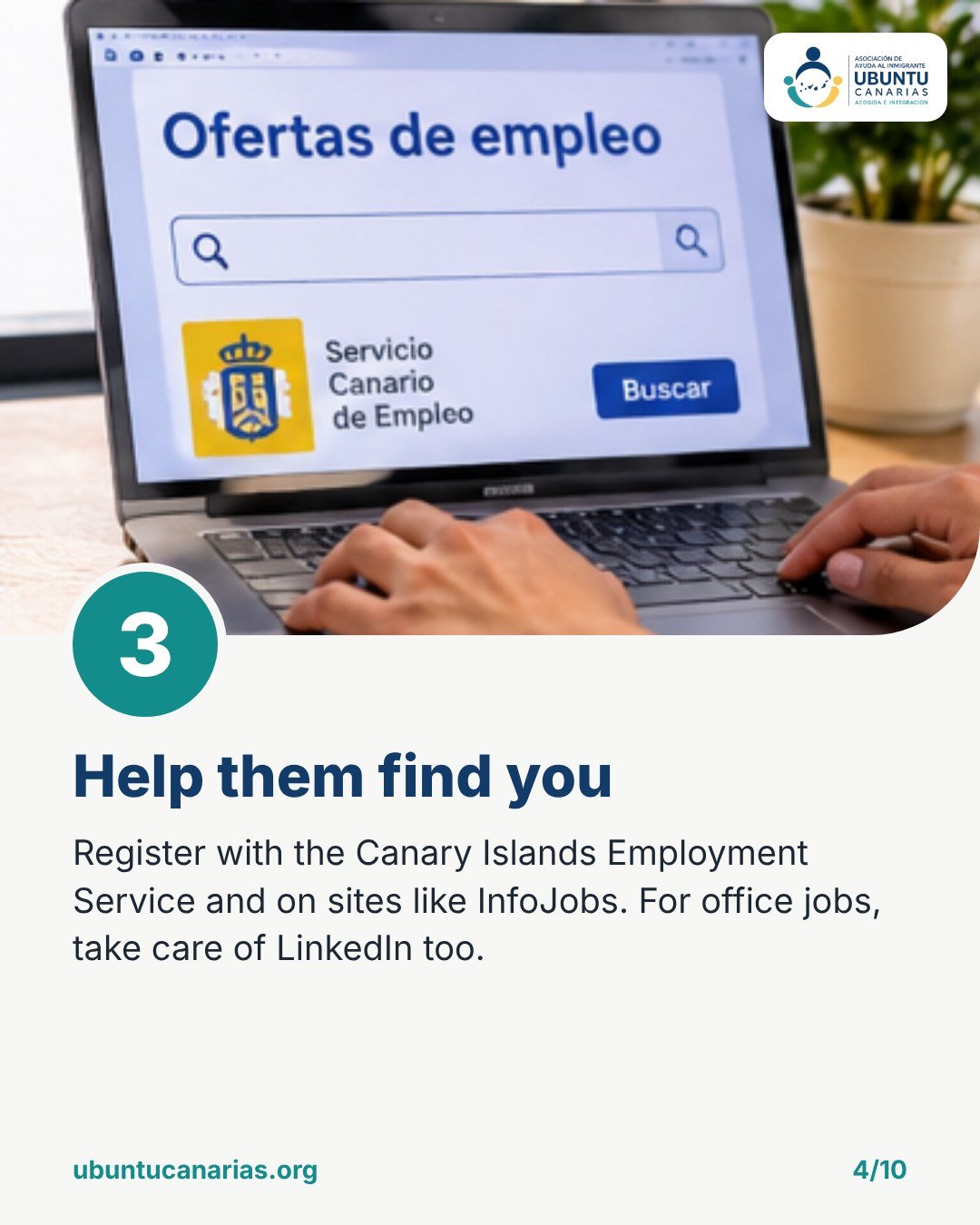
- Register as a job seeker with the Canary Islands Employment Service (Servicio Canario de Empleo). Some offers only come through there.
- Create a complete profile on job sites like InfoJobs or Indeed.
- If you are looking for office, administration or technical work, take care of your LinkedIn profile too. For hospitality, cleaning or warehouse work it is not essential.
We have step-by-step guides to InfoJobs and LinkedIn on our website.
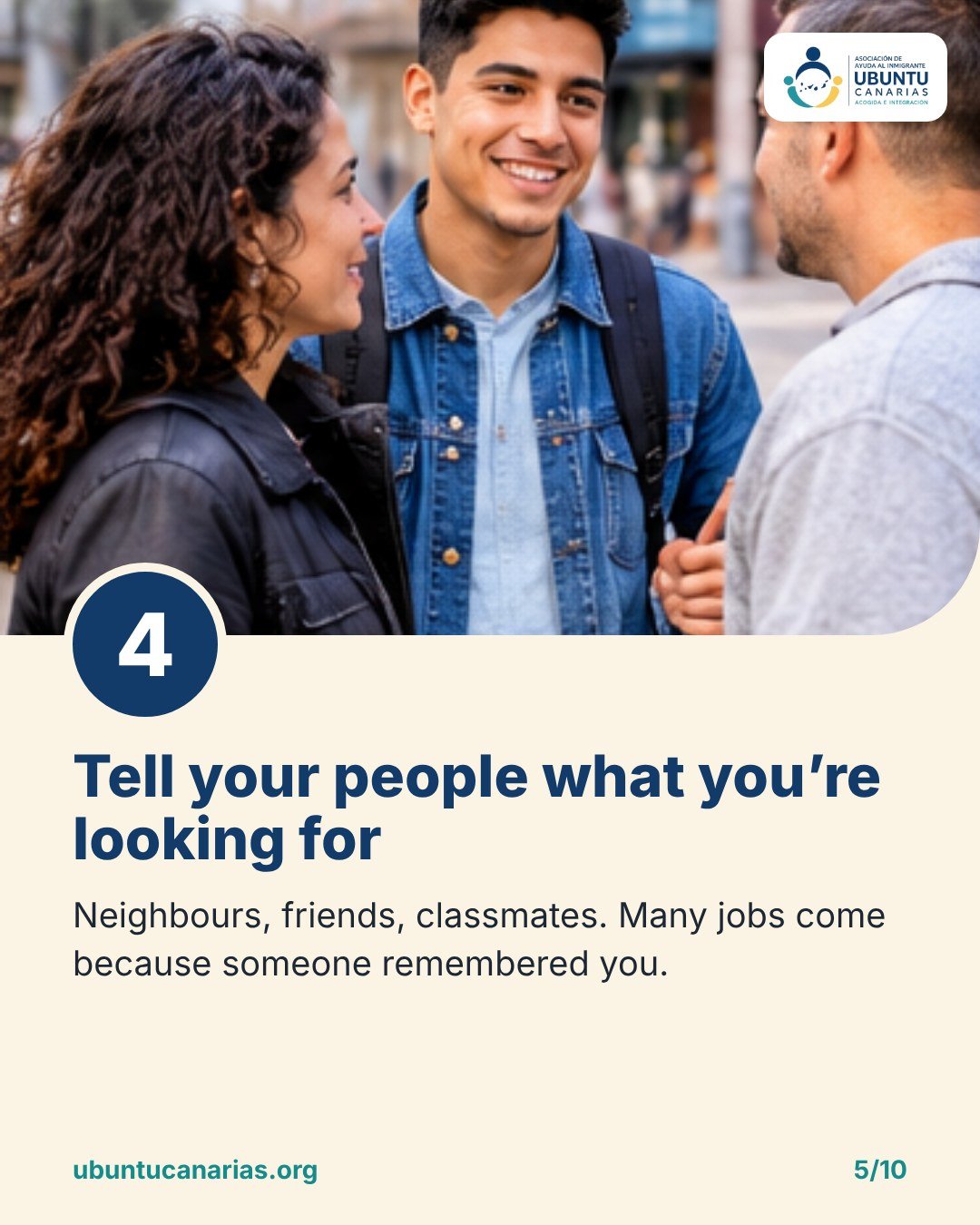
4. Tell the people around you what you are looking for
In Spain, asking family, friends and acquaintances is one of the most common ways to look for work. It is not about asking for favours. It is about people knowing you are looking, so they remember you when they hear about something.
Tell your neighbours, the people you did a course with, the people at your association or in your WhatsApp group. Say what you are looking for in one clear sentence: “I’m looking for cleaning work in the mornings in Telde.”
5. Don’t wait only for published offers
Many jobs are filled without any offer being published. That is why it is worth going directly to the companies you are interested in. This is called a speculative application.
- Take your CV in person to hotels, shops, supermarkets or restaurants.
- Ask for the person in charge and say in one sentence what job you are looking for.
- Before the high tourist season and before Christmas, many companies need staff.
6. Prepare every interview
You can tell when someone has prepared for an interview. Before you go:
- Look at what the company does: its website, its social media, what its customers say.
- Think of two or three real examples from your experience that show how you work.
- Take one or two questions to ask at the end, for example about the timetable or the team.
Remember that the interview is also a chance for you to get to know the company. We talk about it in What if the company interviewing you is not a good candidate for you?
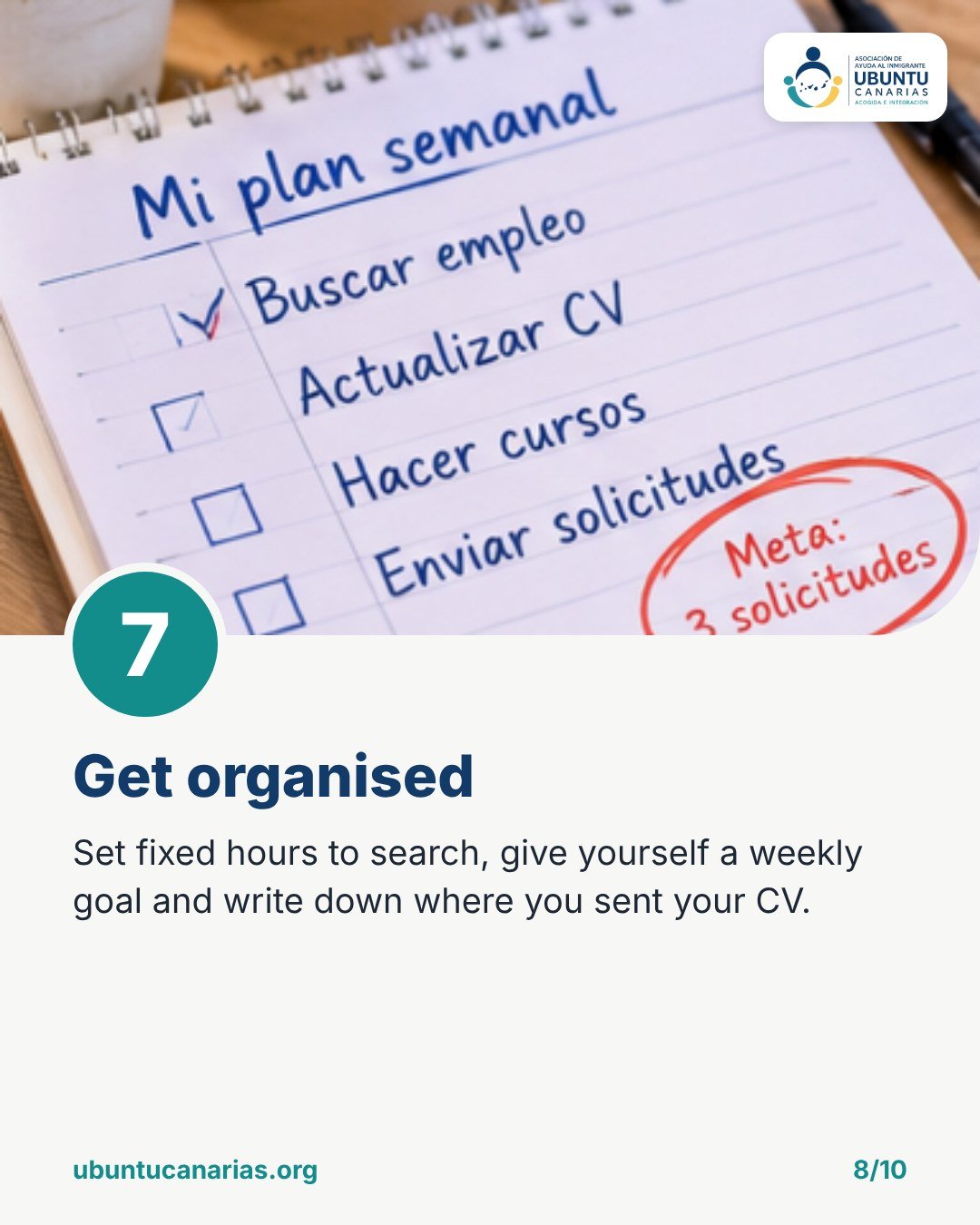
7. Get organised
Searching without order is exhausting and makes you miss opportunities. Some simple ideas:
- Set aside fixed hours every day or every week to search.
- Give yourself a small goal, for example sending five CVs a week.
- Write down where you sent your CV, when, and whether they answered.
There is a template in organise your job search.
8. Keep learning, and learn from every “no”
A short course can open doors: food handler certificate, forklift, computer skills, languages. Every week we publish free courses in free training.
Every “no” hurts, and that is normal. Often it doesn’t depend on you: the company already had someone, or was looking for a different profile. When you can, ask what you could improve. And rest when you need to; looking for a job is hard work too.
To get started
Choose one or two of these habits and try them this week. If you would like us to support you in your search, write to us.